Split fulfilment
One order becomes one shipment per seller, each tracked separately.
Concept project: a sample build that shows how we approach this kind of product. The client, features and figures are illustrative.
Full stack · Next.js + Node.js · E-commerce · Marketplace
A multi-vendor marketplace where independent makers sell to customers through one storefront and one checkout.
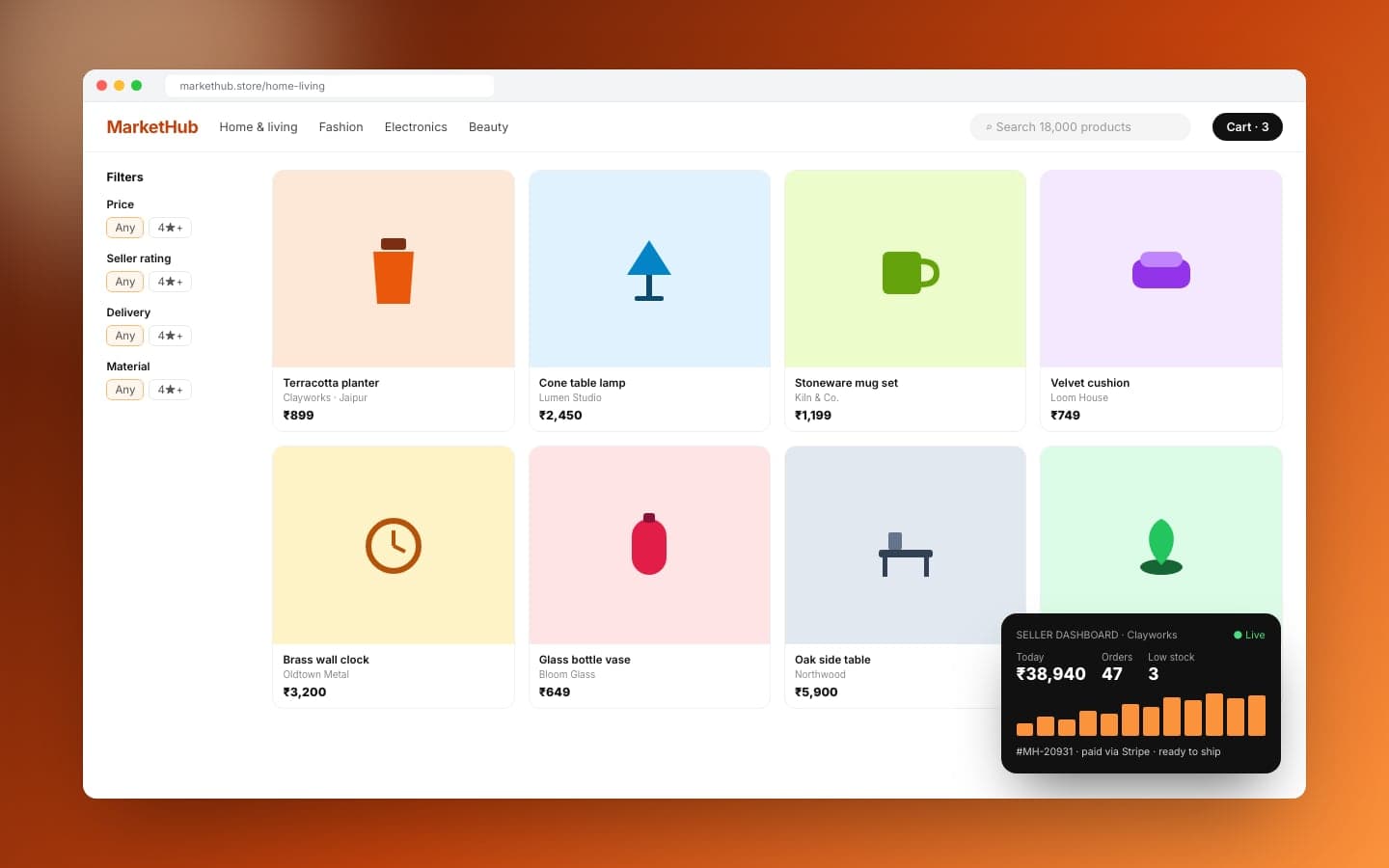
Overview
A group of independent home-goods makers sold through Instagram DMs and spreadsheets. Orders got lost, stock ran out without warning, and customers buying from two makers had to pay twice. MarketHub brings them into one marketplace: shared product discovery and checkout for customers, a dashboard for every seller, and moderation tools for the operators.
Problems & fixes
Pick a problem to see what was wrong, what we built and what changed.
Buying from three makers meant three conversations and three bank transfers.
One cart and Stripe checkout across sellers, with the order split into per-vendor fulfilment records automatically.
One payment for the customer, and each maker sees only their part of the order.
Impact
How it works
Click any part of the system, or play the flow from start to finish.
Fast, SEO-friendly discovery, filters, product pages, cart and order tracking.
One order becomes one shipment per seller, each tracked separately.
Inventory races and checkout failures are covered by automated tests.
Server-rendered storefront with optimised product images.
Timeline
Tech stack
Tell us what you're building. A senior engineer, not a salesperson, replies within one business day.
Start a project